
Blog
Load Cell Glossary: Every Term Explained in Plain English

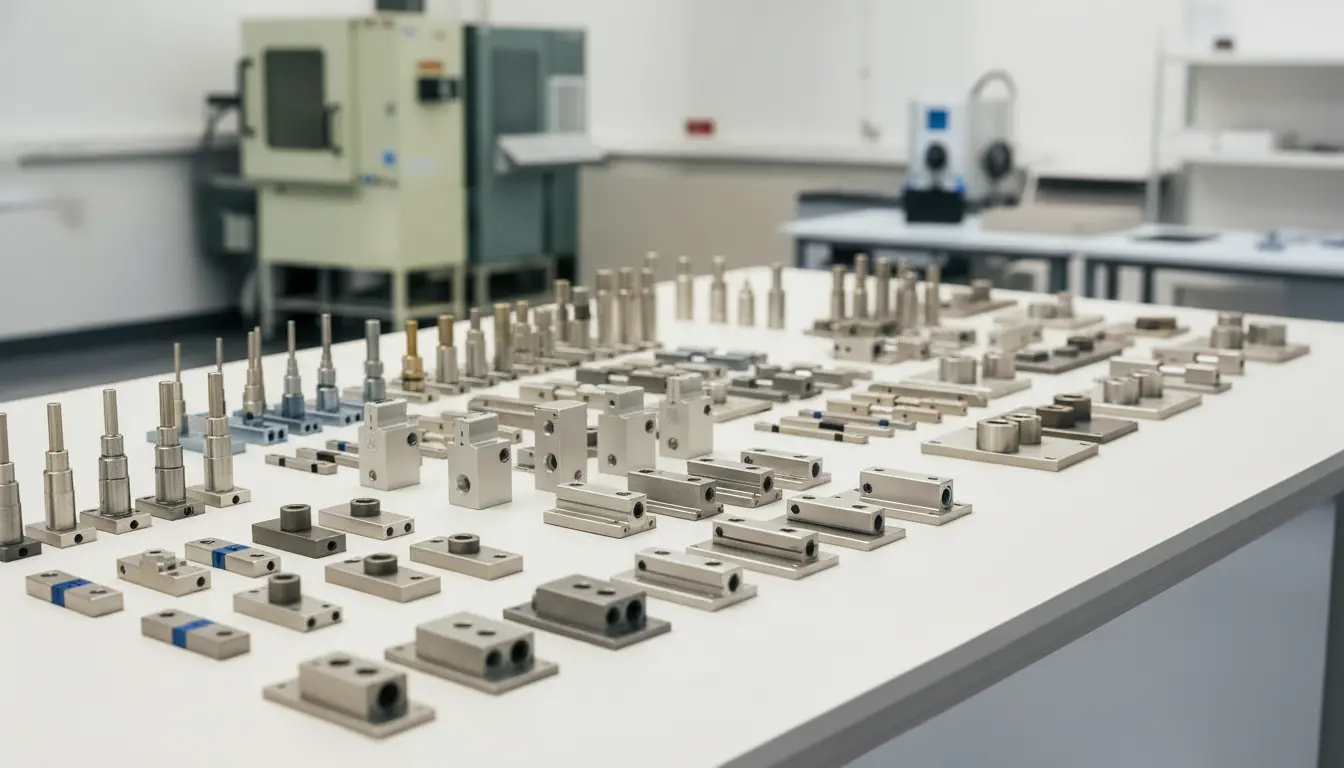
Load cell datasheets are full of short, technical terms such as mV/V, creep, hysteresis and C3. Each one describes something simple that you can understand with an everyday comparison. This glossary explains the most common load cell terms in plain English, with a quick example for each, so you can read a datasheet with confidence and compare two load cells fairly. The terms are grouped by topic: capacity and overload, signal and wiring, accuracy and errors, approvals, and protection.
Capacity and overload terms
Rated capacity (also called Emax or maximum load)
The heaviest load the cell is designed to measure while keeping its stated accuracy. Think of it as the “full scale” on a kitchen scale. A 500 kg load cell is built to measure up to 500 kg.
Safe overload (or safe load limit)
The load the cell can briefly carry above its rated capacity without being damaged. It is commonly quoted as a percentage of rated capacity, often around 150%, but the figure varies, so always check the datasheet. A good comparison is a bridge with a weight limit sign: it will survive an occasional heavier truck, but you should not rely on that.
Ultimate overload (or breaking load)
The load at which the cell may be permanently damaged or break. It is higher than safe overload. Never plan to get anywhere near it.
Dead load (or tare weight)
The weight of the empty structure the load cells carry, such as an empty tank, a platform or a hopper. The cells carry it all the time, and it uses up part of their capacity. The scale is zeroed so that only the contents show.
Live load
The weight of the thing you actually want to measure, such as the product in the tank.
Tare
Setting the display to zero with something already on the scale, such as an empty bucket, so the next reading shows only what you add.
Span
The difference between the cell’s output at zero load and at full capacity. If the cell gives 0 mV at no load and 20 mV at full load, the span is 20 mV.
Signal and wiring terms
Strain gauge
The very thin foil sensor glued inside the load cell. When the metal flexes, the foil stretches or squashes and its electrical resistance changes. See strain gauge vs load cell.
Wheatstone bridge
The way four strain gauges are wired together so that tiny changes in resistance produce a measurable voltage. Our guide to the load cell Wheatstone bridge goes deeper.
Excitation voltage
The steady voltage you feed into the load cell so that it can produce a signal. Typical values are 5 V or 10 V DC. Without excitation, the cell is silent.
Rated output, or sensitivity (mV/V)
How much signal the cell gives at full load for each volt of excitation. A common value is 2 mV/V. With 10 V excitation, a 2 mV/V cell produces 20 mV at full load, because 2 × 10 = 20. At half load it gives 10 mV. This is why the signal is so small and needs an amplifier. Read more in load cell output explained.
Input and output resistance
The electrical resistance measured across the excitation wires (input) and the signal wires (output). Common values are 350 ohms and 1,000 ohms. They matter when you connect many cells together or choose an indicator.
4-wire and 6-wire cables
A 4-wire cell has two excitation wires and two signal wires. A 6-wire cell adds two “sense” wires that let the indicator measure the actual voltage reaching the cell, which compensates for long cables and temperature changes. Six-wire is better for long cable runs.
Junction box (summing box)
A small box where the cables from several load cells are joined so that their signals add up into one. It lets you use four cells on a tank and read the total weight with one indicator.
Amplifier, signal conditioner and indicator
Electronics that boost the tiny signal and turn it into a reading or a standard output. See load cell amplifiers and indicators explained.
Accuracy and error terms
Non-linearity
How far the cell’s real output strays from a perfectly straight line between zero and full load. A cell with 0.02% non-linearity is very close to straight.
Hysteresis
The difference in reading at the same load depending on whether you reached it by adding weight or by removing weight. Imagine a spring that does not quite return to the same place. Lower is better.
Repeatability
How closely the cell gives the same reading when you apply the same load again under the same conditions.
Creep
The slow drift in reading when a constant load stays on the cell for a long time, often measured over 30 minutes. A tank holding steady for hours is a place where creep matters.
Zero balance
The small signal a cell gives with no load. It is normal, and is removed when the scale is zeroed, but it must be within the stated limit.
Temperature effect on zero and on span
How much the zero reading and the full-load output change when the temperature changes. Outdoor tanks and hot factories are where this matters.
Combined error
A single figure that combines non-linearity, hysteresis and sometimes repeatability. It gives a quick way to compare cells.
Side load and eccentric load (corner error)
Side load is a sideways push, such as wind or a pipe pulling on a tank. Eccentric load means the weight is not centred, so the same weight gives a slightly different reading depending on where it sits on the platform. Good design and mounting reduce both. See load cell installation.
Resolution
The smallest change in weight the system can show. A 10,000 kg scale that shows in 5 kg steps has a resolution of 5 kg.
Approval and class terms
OIML R60
An international recommendation for testing load cells used in legal metrology. See legal for trade weighing in Australia.
Accuracy class (C3, C4, C6)
A rating that shows the maximum number of scale divisions a load cell can support: 3,000 for C3, 4,000 for C4 and 6,000 for C6. Higher numbers mean finer steps are possible. More in load cell accuracy classes.
nmax
The maximum number of verification intervals (scale divisions) the cell is rated for.
vmin
The smallest verification interval the cell can support. A smaller vmin lets you make a scale with finer steps.
NTEP
A United States approval program. Many load cells show an NTEP rating, for example class III 5,000 divisions, on the datasheet.
Protection and environment terms
IP rating
A code that shows how well the cell is sealed against dust and water. IP66 resists powerful water jets, IP67 resists temporary immersion, and IP68 resists continuous immersion under conditions set by the maker. IP69K is for high-pressure, high-temperature washdown. See load cells for food and beverage washdown.
Hermetically sealed
Completely closed by welding, often with a glass-to-metal cable entry, so that moisture cannot get in at all.
Potted
Filled with a protective compound around the strain gauges. Revere cells, for example, use a potting compound together with extra mechanical protection.
Surge protection
Components built into a cell or its wiring to reduce damage from voltage spikes, such as those from lightning or welding.
Intrinsically safe and explosion-proof
Terms for equipment approved for use where flammable gas or dust may be present. See hazardous area load cells.
Load cell shapes
- Single point: a flat block that supports a whole platform from one position.
- Shear beam: a bar fixed at one or both ends, loaded in the middle.
- S-type: an S-shaped block that works in tension (pulling) or compression (pushing).
- Canister (column): a vertical cylinder that carries heavy compression loads.
- Disk and ring torsion: low-profile cells for tight spaces.
See load cell types for pictures and use cases.
Example: reading a datasheet
Here is how to read a short datasheet entry in plain English.
| Datasheet says | It means |
|---|---|
| Rated capacity: 500 kg | Designed to measure up to 500 kg |
| Safe overload: 150% | Can briefly take up to 750 kg without damage |
| Rated output: 2 mV/V | Gives 2 millivolts for every volt of excitation at full load |
| Excitation: 5 to 15 V DC | You can power it with any steady voltage between 5 and 15 V |
| Accuracy class: C3 | Rated for up to 3,000 scale divisions |
| Protection: IP67 | Sealed against dust and temporary immersion |
| Cable: 6-wire | Includes sense wires for long cable runs |
Frequently asked questions
What is the difference between accuracy and resolution?
Resolution is the smallest step the display can show. Accuracy is how close the reading is to the true weight. A display can show tiny steps and still be inaccurate.
Why is mV/V such a small number?
Because the metal moves only a tiny amount. That is why an amplifier is needed.
What does “full scale” mean?
The top of the measuring range, which for a load cell is its rated capacity.
Is a higher capacity load cell always better?
No. A cell much larger than needed gives a small signal at your working load, so you lose resolution. Choose a cell close to what the job needs, with a sensible safety margin. See choosing the right load cell.
Where can I read more?
Start with our complete load cell guide, or ask our team to explain a datasheet you are looking at.

One thought on “Load Cell Glossary: Every Term Explained in Plain English”