
Blog
Five Real Load Cell Weighing Systems, Step by Step

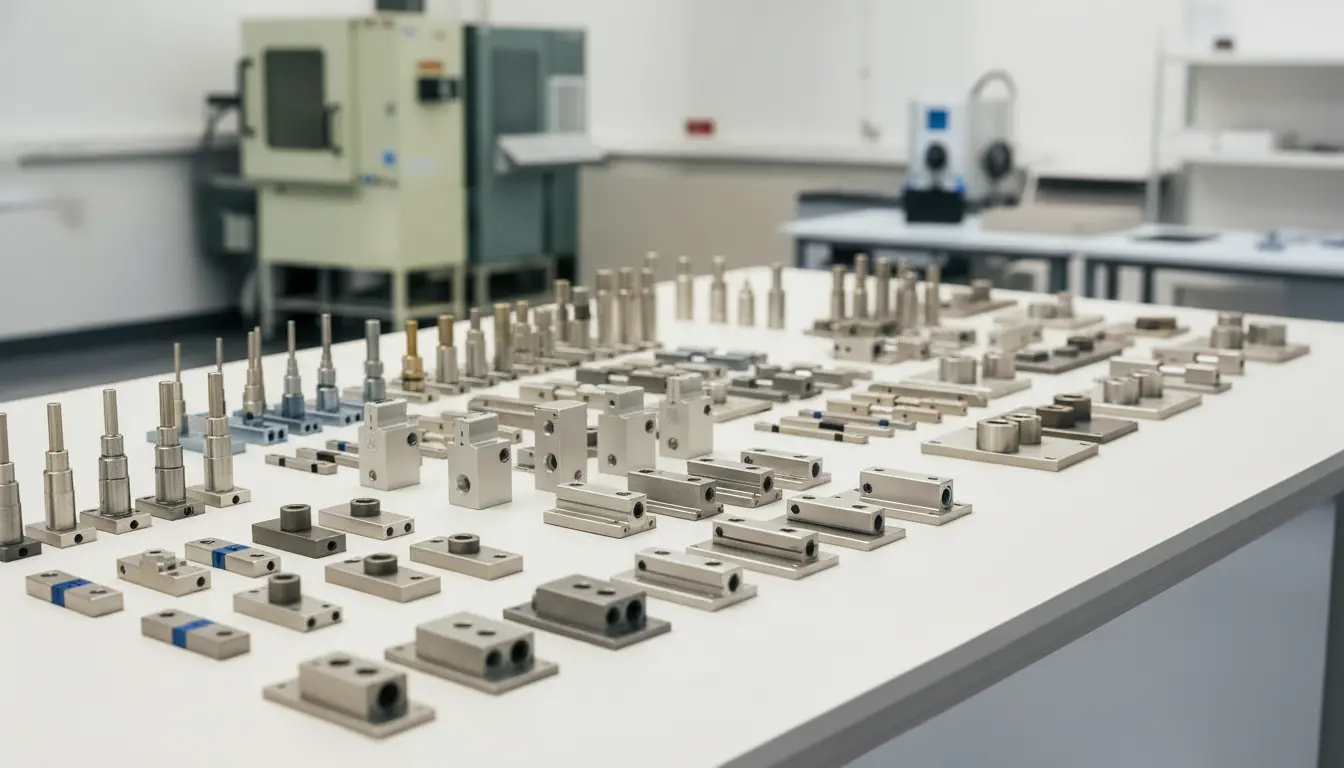
The easiest way to understand how load cells fit together is to see them in real jobs. This guide walks through five common weighing systems, a shop bench scale, a warehouse floor scale, a bottle filling machine, a crane scale and a truck weighbridge. For each, we show what is being weighed, how many load cells are used, how to pick the capacity, what electronics are needed and what can go wrong. The numbers are worked examples to teach the method, not specifications for your equipment, so always confirm your own design with a supplier.
The method in one minute
Every weighing system follows the same recipe.
- Find the maximum total weight: the heaviest thing you will ever weigh, plus the weight of the platform or container itself.
- Decide how many cells: one for a small platform, three or four for a bigger platform or vessel, more for a long weighbridge.
- Divide the total by the number of cells: this gives each cell’s share.
- Add a safety margin: typically 1.25 to 1.5 times, more where shocks or uneven loads are likely.
- Pick the next standard capacity up.
- Choose the type, material and sealing for the environment.
- Choose the electronics that suit what you want to do with the weight.
For the theory behind these steps, see choosing the right load cell.
System 1: a shop bench scale
The job: a cafe weighs coffee beans up to 15 kg on the counter.
- Total weight: 15 kg of beans plus a 1 kg platform and container, so 16 kg.
- Cells: one single point load cell, because a small platform can be carried by one cell.
- Capacity: 16 kg with a margin of 1.5 times is 24 kg, so a 30 kg or similar standard cell works. The Tedea-Huntleigh Model 1042 starts from 5 kg capacities and is designed for bench and retail scales.
- Electronics: a simple indicator with a display.
- Conditions: dry, indoors, so aluminium is fine.
- What can go wrong: uneven table, a sticky platform, or overloading by dropping heavy bags on it.
- Legal note: if the cafe sells beans by weight, it needs an approved trade scale. See legal for trade weighing in Australia.
System 2: a warehouse pallet floor scale
The job: a distributor weighs pallets up to 1,500 kg on a floor scale.
- Total weight: 1,500 kg load, plus about 150 kg for the steel platform, which is 1,650 kg.
- Cells: four, one at each corner.
- Each cell’s share: 1,650 divided by 4 is about 413 kg. With a margin of 1.5 times that is about 620 kg, so a standard 1,000 kg cell is a sensible choice. (The Revere Model 5123 covers 500 to 5,000 kg and suits small to medium platform scales.)
- Electronics: a junction box joins the four cells, and an indicator displays the weight. A transmitter can send it to a warehouse system.
- Conditions: forklifts drive on and off, so shocks are likely. Choose alloy steel or stainless, and add ramps and stops.
- What can go wrong: uneven corners (an out-of-balance reading), forklift impact, and pallets placed off-centre.
More on this type of scale is in load cells for bench and platform scales.
System 3: a bottle filling machine
The job: a sauce maker fills 500 g jars on a rotary filler, 40 jars a minute, and wants to fill by weight, not volume.
- Weight per fill: 500 g of sauce plus a jar of about 250 g, so 750 g on each weighing station.
- Cells: one small, fast cell for each filling head.
- Special need: speed. The cell must settle quickly after each jar lands on it. Fluid-damped cells such as the Tedea-Huntleigh Model 240, or the Model 1410 designed for rotary filling machines, are built for this.
- Electronics: a fast controller that reads the cell many times a second, filters out vibration, and closes the valve near the target. This is called two-stage or dribble feeding.
- Conditions: washdown and sticky sauce, so IP66 or better. See load cells for food and beverage washdown.
- What can go wrong: machine vibration, air currents, and a cell that is too big for such small weights.
The principle is explained in load cells in batching and filling systems.
System 4: a crane scale on a workshop hoist
The job: a fabrication shop wants to know how heavy its steel assemblies are when lifted, up to 4,000 kg.
- Total weight: 4,000 kg plus lifting hooks and slings of about 100 kg, so 4,100 kg.
- Cells: one S-type tension cell in line with the hoist.
- Capacity: 4,100 kg with a margin for swinging and snatching. Lifting is a dynamic job, so a larger margin, such as 2 times, is sensible, giving about 8,200 kg. A 10,000 kg S-type, such as the Revere 9363 (50 to 10,000 kg), is a typical choice.
- Electronics: a wireless or wired indicator that the operator can see.
- Safety: the cell must be rated for the lifting application, and the crane scale must be used within the working load limit of the hoist and rigging. A load cell is not a substitute for lifting equipment certification.
- What can go wrong: side loading, twisting, shock loading and pushing the scale beyond its limit.
See tension load cells for crane scales for more.
System 5: a truck weighbridge
The job: a quarry weighs trucks up to 60 tonnes gross on a weighbridge.
- Cells: usually six or eight compression cells, three or four on each side of the platform.
- Capacity: do not simply divide 60 tonnes by the number of cells. Trucks load the bridge unevenly, with a heavy axle group sitting over just a few cells at a time, and vehicles brake, bounce and arrive at speed. Weighbridge designs therefore use high-capacity cells with large margins. For example, the Revere ASC2 is available in 30, 40 and 50 tonne capacities. The weighbridge maker specifies the exact capacity.
- Type: self-aligning, stainless steel or sealed compression cells with built-in surge protection suit outdoor use, because lightning is a real threat.
- Electronics: a junction box, a weighbridge indicator in the office, and a computer that prints tickets.
- Conditions: rain, dust, mud, heat and electrical storms.
- Legal note: a weighbridge that charges by weight must be an approved, certified instrument.
- What can go wrong: water in the pit, cable damage, debris trapped under the platform, binding from worn mounts and lightning.
Read weighbridge load cells and load cell installation before planning one.
Compare the five at a glance
| System | Cells | Typical cell style | Biggest risk |
|---|---|---|---|
| Bench scale | 1 | Single point | Overloading and uneven bench |
| Pallet floor scale | 4 | Single-ended shear beam | Forklift shock, corner imbalance |
| Bottle filler | 1 per head | Fluid-damped single point | Vibration, speed, washdown |
| Crane scale | 1 | S-type tension | Shock load, twisting |
| Weighbridge | 6 to 8 | Compression or shear beam | Lightning, water, binding |
Lessons that apply to every system
- Weigh the structure too. The platform, tank or hopper uses up part of the capacity.
- Let the cell do its job. Load straight down the centre, with nothing else carrying part of the weight.
- Protect from the environment. Match the sealing and material to the conditions.
- Match the electronics to the goal. See load cell amplifiers and indicators.
- Calibrate with real weights after installation and at regular intervals. See load cell calibration.
- Know the rules. If money depends on the weight, check the trade measurement requirements.
Your own system: a worksheet
Answer these questions, then send them to us.
- What are you weighing, and what is the maximum weight?
- What is the weight of the platform, container or vessel itself?
- How many support points does it have?
- Will the load be dropped, pulled, vibrate or move?
- Is the area wet, washed down, dusty, hot, outdoors or hazardous?
- How accurate does it need to be, and is it for trade?
- What do you want to do with the weight: display it, control a process, or log data?
One big cell or several small ones?
Beginners often ask whether it is better to use one large load cell or several smaller ones. For small platforms, one single point cell is simple and works well. For anything with legs or corners, several cells give a more stable support and share the load. The trade-off is cost and complexity, because more cells need a junction box and careful matching. As a rule, use the number of cells that the structure naturally needs, then size each cell for its share of the load.
Frequently asked questions
Can I use bigger load cells than I need to be safe?
Slightly bigger is fine, but much bigger loses resolution because the signal at your working load is small. Aim for a sensible margin, not the biggest cell available.
Why do bigger platforms use more cells?
To support the platform evenly and to share the load. Four corners are common for rectangular platforms.
Can I mix different load cell models in one scale?
Avoid it. Use matched cells so that the load is shared predictably.
Where can I read more?
Start at our complete load cell guide, then read tank, silo and hopper weighing, or contact us with your worksheet.

One thought on “Five Real Load Cell Weighing Systems, Step by Step”