Blog
Load Cell Types Explained: Which One Do You Need?

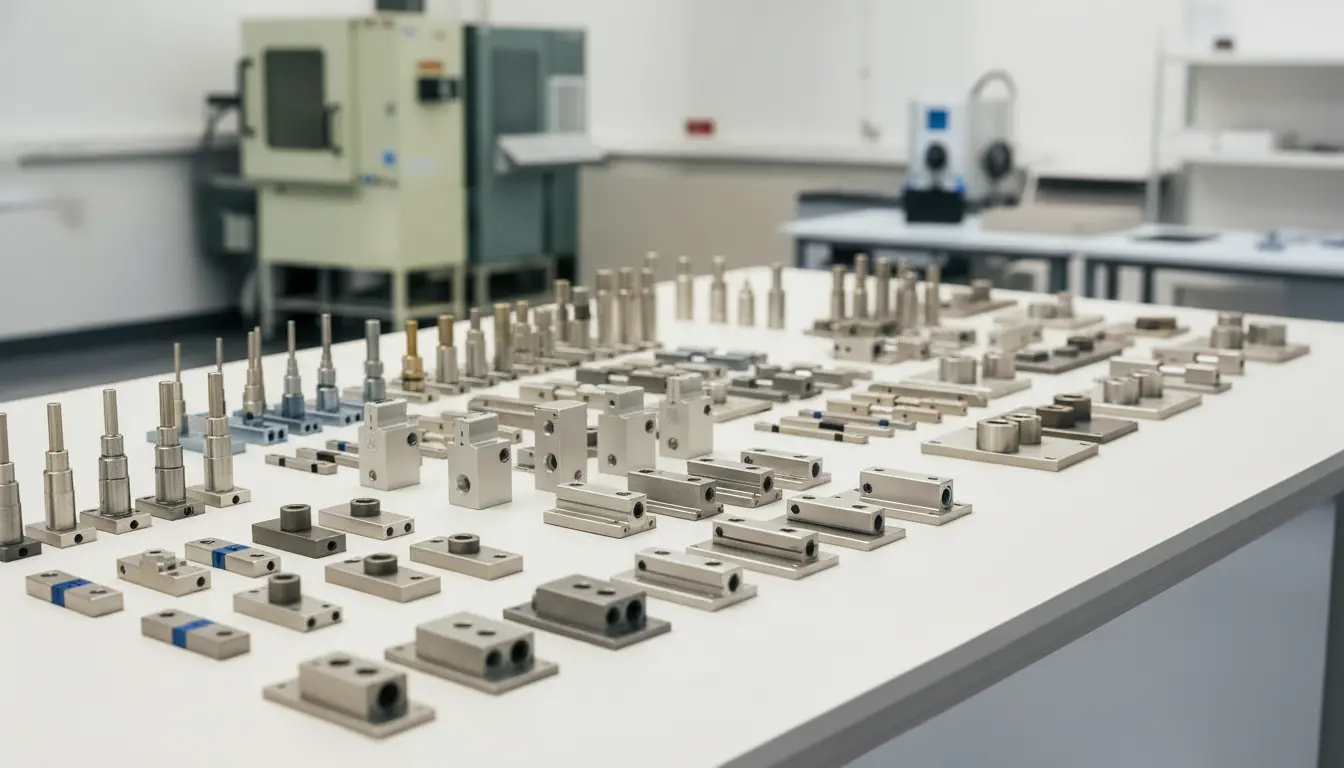
Load cell types vary by mechanical design, force direction, capacity, accuracy, and application. Choosing the right load cell is essential for reliable weighing and force measurement, particularly in industrial environments where accuracy and consistent performance matter.
From compression and tension load cells to single point, shear beam, bending beam, S-type, and canister designs, each type is engineered for specific measurement requirements. Some load cells are designed for weighing platforms, while others are better suited to tanks, hoppers, cranes, lifting systems, or industrial force monitoring.
Understanding the differences between load cell types makes it easier to select a sensor based on load capacity, installation method, environmental conditions, accuracy requirements, and force direction. This guide explains the major load cell types, how they work, and where each design is commonly used.
What Are Load Cell Types?
Load cell types are classified according to their mechanical construction, force direction, capacity, installation method, and intended application. Different designs are developed to handle specific weighing and force-measurement requirements, from compact bench scales to heavy-duty industrial systems.
The main factors used to classify load cells include:
- Mechanical construction: The shape and sensing design of the load cell.
- Force direction: Whether the sensor measures tension, compression, or both.
- Rated capacity: The maximum load the sensor is designed to measure.
- Application: The type of weighing or force-measurement system where it will be installed.
- Mounting method: How the load cell is mechanically installed and loaded.
- Environmental requirements: Conditions such as moisture, dust, temperature, vibration, and corrosion.
Main Types of Load Cells
The major load cell types include:
- Single Point Load Cells – Commonly used in platform and bench scales.
- Shear Beam Load Cells – Widely used in industrial scales, tanks, and hoppers.
- S-Type Load Cells – Suitable for both tension and compression measurement.
- Compression Load Cells – Designed to measure downward or compressive forces.
- Canister Load Cells – Heavy-duty sensors for high-capacity compression applications.
- Ring Torsion Load Cells – Designed for specialised high-capacity weighing applications.
- Bending Beam Load Cells – Suitable for compact, low-to-medium capacity weighing systems.
- Specialty Load Cells – Includes load pins, shackle load cells, impact load cells, and other application-specific designs.
Load Cell Types Comparison at a Glance
The following table provides a quick overview of the most common load cell types, their typical capacity ranges, force direction, applications, and mounting arrangements. Actual capacity and installation requirements vary by model and manufacturer, so the relevant datasheet should always be checked before selection.
| Load Cell Type | Typical Capacity | Force Direction | Typical Application | Mounting |
|---|---|---|---|---|
| Single Point | Low–medium | Compression | Platform and bench scales | Platform |
| Shear Beam | Medium–high | Compression | Tanks, hoppers, floor scales | Fixed mounting |
| S-Type | Low–high | Tension & compression | Suspended weighing, force testing | In-line |
| Compression | Medium–very high | Compression | Tanks, silos, heavy weighing | Compression mounting |
| Canister | High | Compression | Heavy industrial weighing | Base-mounted |
| Ring Torsion | Medium–high | Compression | Industrial weighing | Special mounting |
| Bending Beam | Low–medium | Compression | Bench and platform scales | Platform mounting |
| Specialty Load Cells | Application-dependent | Varies | Load pins, shackle, impact and dynamic measurement | Application-specific |
Choosing the Right Load Cell Type
The best load cell type depends on more than capacity. Consider the force direction, mounting arrangement, required accuracy, environmental conditions, available space, and application requirements before selecting a sensor.
For example, a single point load cell may be suitable for a compact platform scale, while a shear beam or compression load cell may be more appropriate for a tank or hopper. For suspended loads, an S-type or specialised tension load cell may provide a better solution.
Single Point vs Shear Beam vs S-Type
Single point, shear beam, and S-Type load cells are three commonly used designs, but each is suited to different force-measurement requirements. The main differences are their force direction, capacity range, application, and installation method.
| Feature | Single Point | Shear Beam | S-Type |
|---|---|---|---|
| Force direction | Compression | Compression | Tension & compression |
| Capacity | Low–medium | Medium–high | Low–high |
| Typical application | Platform & bench scales | Tanks, hoppers & floor scales | Suspended weighing & force testing |
| Installation | Mounted under a platform | Fixed between structure and load | Installed in-line with the applied force |
Single Point Load Cells
Single point load cells are primarily designed for platform and bench scales. They are usually mounted beneath the weighing platform and can provide reliable measurement even when the load is positioned away from the centre.
Shear Beam Load Cells
Shear beam load cells are designed for more demanding industrial weighing applications. They are commonly installed as part of multi-load-cell systems supporting tanks, hoppers, floor scales, and platforms.
S-Type Load Cells
S-Type load cells have an S-shaped design and can generally measure both tension and compression. They are installed in-line with the applied force and are commonly used for suspended weighing, force testing, and tension measurement.
In simple terms: choose single point for compact platform weighing, shear beam for robust industrial weighing, and S-Type when tension or combined tension/compression measurement is required.
Compression & Canister Load Cells
Compression and canister load cells are designed to measure force applied downward through a load-bearing structure. Both are widely used in industrial weighing, but their construction, capacity, and installation requirements make them suitable for different applications.
Compression Load Cells
Compression load cells work by measuring the downward force applied to their sensing element. When a load is placed on the sensor, the internal elastic element deforms slightly. Strain gauges detect this deformation and convert it into a small electrical signal proportional to the applied load.
Compression load cells are commonly used in weighing tanks, hoppers, silos, platforms, machinery, and industrial weighing systems. They are particularly useful where the load is applied vertically and the sensor can be mounted between the load structure and a stable foundation.
Choose a compression load cell when you need reliable measurement of vertical or downward forces, especially in applications where the load is supported directly above the sensor. They are available in different capacities, allowing them to be used for both general industrial weighing and heavier-duty applications.
Canister Load Cells
Canister load cells are a heavy-duty form of compression load cell designed for high-capacity and demanding industrial weighing applications. Their robust cylindrical construction provides excellent resistance to heavy loads and challenging operating conditions.
Like other compression load cells, canister load cells measure the deformation of an internal sensing element when a vertical load is applied. The strain gauges convert this mechanical deformation into an electrical output that can be processed by a weighing indicator, amplifier, PLC, or other measurement system.
Canister load cells are commonly used in large tanks, silos, hoppers, truck scales, heavy industrial platforms, and high-capacity weighing systems. Their rugged construction makes them suitable where high load capacity and long-term mechanical stability are important.
Choose a canister load cell when the application involves very high loads, heavy structures, or demanding industrial environments. They are particularly suitable when a compact but robust high-capacity compression sensor is required.
Compression vs Canister Load Cells
| Feature | Compression Load Cell | Canister Load Cell |
|---|---|---|
| Force direction | Compression | Compression |
| Typical capacity | Medium to very high | High to very high |
| Construction | Compact industrial design | Heavy-duty cylindrical design |
| Applications | Tanks, hoppers, platforms, machinery | Silos, heavy platforms, truck scales, large tanks |
| Best suited for | General vertical load measurement | High-capacity industrial w |
Which Load Cell Type Is Right for You?
Choosing the right load cell depends on more than the required capacity. The force direction, application, environment, accuracy, and mounting arrangement all affect sensor performance and reliability. A simple selection process can help narrow down the most suitable load cell type.
1. Check the Required Capacity
Start by determining the maximum load the load cell needs to measure. Select a capacity that comfortably covers the expected operating load without unnecessarily oversizing the sensor.
For example, single point and bending beam load cells are commonly used for lower-capacity weighing, while shear beam, compression, and canister load cells are better suited to medium- and high-capacity applications.
For systems using multiple load cells, consider the total system capacity and how the load will be distributed between sensors.
2. Identify the Force Direction
Determine whether the load will be applied as compression, tension, or both.
Compression load cells are designed for downward forces, making them suitable for tanks, platforms, hoppers, and industrial weighing. Tension and S-Type load cells are suitable when the sensor must measure a pulling force. Some S-Type designs can measure both tension and compression.
The force direction should always match the load cell’s mechanical design and installation requirements.
3. Consider the Application
The application often determines which load cell type is most practical.
Single point load cells are commonly used in platform and bench scales, while shear beam load cells are widely used in tanks, hoppers, floor scales, and industrial weighing systems. S-Type load cells are useful for suspended weighing and force testing, while compression and canister load cells are suited to heavy vertical loads.
For specialised requirements, load pins, shackle load cells, impact load cells, and other designs may provide a better solution.
4. Evaluate the Operating Environment
Consider where the load cell will operate. Exposure to water, dust, chemicals, temperature changes, vibration, shock, or outdoor conditions can affect sensor performance and service life.
For harsh environments, look for suitable sealing, ingress protection, construction materials, temperature specifications, and corrosion resistance. Stainless steel or hermetically sealed designs may be appropriate for demanding applications, depending on the manufacturer’s specifications.
5. Define the Required Accuracy
Accuracy requirements should be established before selecting the sensor. Consider the required measurement resolution, accuracy class, repeatability, temperature effects, creep, and system calibration.
For regulated weighing applications, check whether the load cell needs to meet a specific standard or certification, such as OIML R60. Always verify the exact certification and performance specifications for the selected model.
6. Check the Mounting Arrangement
Finally, make sure the load cell can physically fit and operate correctly within the weighing system. Check the available space, mounting points, load introduction method, cable routing, and mechanical constraints.
A single point load cell may be mounted beneath a platform, while a shear beam is typically installed between a supporting structure and the load. Compression and canister load cells require appropriate compression mounting and stable load transfer.
FAQs
How many types of load cells are there?
There are several major load cell types, classified by their mechanical design, force direction, capacity, and application. Common types include single point, shear beam, S-Type, compression, canister, bending beam, ring torsion, load pin, and shackle load cells. The exact number varies by manufacturer and application.
Which load cell type is most accurate?
No single load cell type is always the most accurate. Accuracy depends on the specific model, accuracy class, installation, calibration, temperature, loading conditions, and application. A properly selected and calibrated load cell can provide highly reliable measurements, so the best choice depends on the system’s requirements.
What is the difference between shear beam and single point?
A shear beam load cell is commonly used for industrial weighing systems such as tanks, hoppers, floor scales, and multi-load-cell platforms. A single point load cell is designed for platform and bench scales and can generally accommodate off-centre loading within its specified limits. The main differences are construction, mounting arrangement, capacity, and application.
What is a canister load cell used for?
A canister load cell is a heavy-duty compression load cell designed for high-capacity weighing and force measurement. It is commonly used in large tanks, silos, hoppers, truck scales, heavy platforms, and other industrial systems where substantial vertical loads must be measured reliably.